
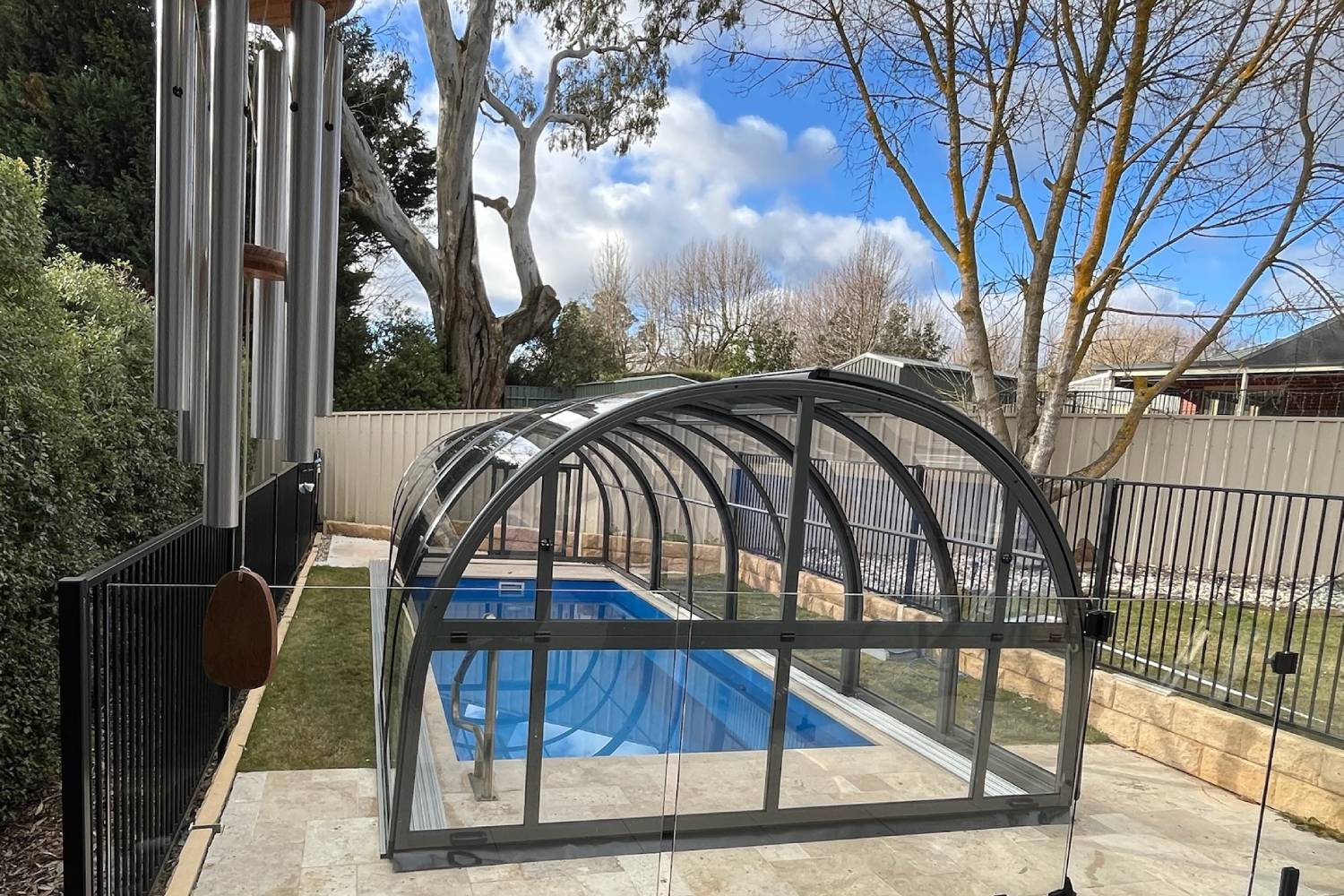
If you’re looking for pool cover alternatives, the simple answer is: there are easier and more convenient options that help reduce water loss, heat loss, and cleaning time without daily hassle.
An option to cover a pool would be with a bubble cover, which many people start out with and then run into problems due to how heavy and hard it is to roll up and use every day.
After a few years of being exposed to the sun, they have generally worn out and need to be replaced. Therefore, many people end up having to replace them every few years and stop using them as frequently, creating increased cost.
In Australia, due to how warm the climate is, pools can lose a lot of water through evaporation. It is estimated that each pool loses approximately 45,000L of water per year due to evaporation alone.
For this reason, most households will have an increase in their water bills without any apparent leaks. Also, leaves and other debris are blown into the pool causing an increase in maintenance; chemicals breakdown faster than normal due to the sun, and the water cools quickly over night requiring higher amounts of heating during the summer months.
These factors are what make pool maintenance so expensive and time-consuming. Choosing a different and more practical option is likely to provide a significant impact on both cost and time. Finding a low-maintenance option gives you additional savings over time, but it does depend on your style and the type of pool you have.
Why People Look Beyond Traditional Covers
Water lost through evaporation due to temperature and wind is one of the main contributors to pool water loss in Australia and other warm and dry climates. Wind increases evaporation by blowing moisture off of the surface of the pool.
According to the Water Corporation (an Australian government agency), evaporation is one of the leading causes of residential pool water loss in warm climates.
Beyond evaporation, there are multiple other factors contributing to pool water loss:
- Daily cleaning from leaves and debris;
- Increased use of chemicals because of UV degradation;
- Heat loss from evaporation at night requires more energy to reheat the pool; and
- Increased maintenance and decreased enjoyment due to on-going maintenance activities.
Before evaluating alternative methods to reduce the total amount of water in your pool, please remember that none of the alternatives below are intended to take the place of a compliant safety barrier for pools. All pool safety barriers in Australia must conform to Australian Standard AS 1926.
Pool Cover Alternatives Worth Knowing About
1. Retractable Pool Enclosures
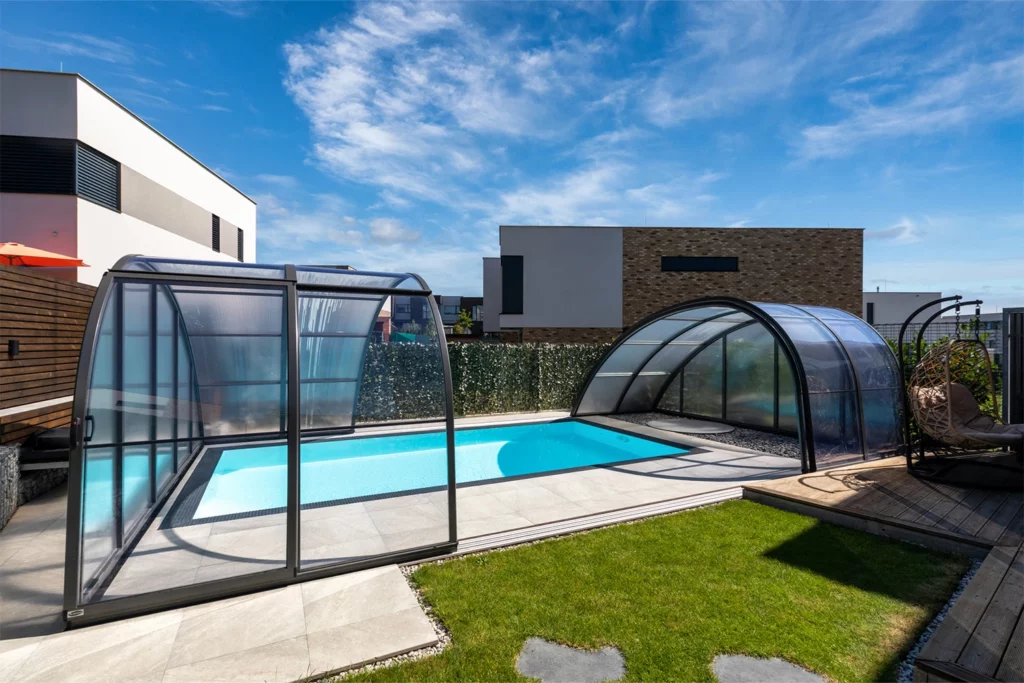
A retractable pool enclosure is a transparent structure that sits over your pool and opens or closes depending on what you need. Think of it less like a cover and more like a sheltered environment built specifically around your water.
They suit all-season swimming, leaf-heavy backyards, windy sites, and anyone who wants a setup that largely takes care of itself once installed.
The evaporation reduction is significant because water is never directly exposed to wind or full sun. Reduced air movement removes the main driver of evaporation, and the greenhouse effect inside retains heat, which means your heating system runs less often.
Debris stays out almost entirely, chemical use drops, and the pool is swim-ready more often because you are not cleaning it out every morning.
For Australian conditions the quality of the panels matters. Good polycarbonate holds its clarity under UV exposure for years when maintained properly. Coastal installations need frames treated specifically for salt air resistance.
Enclosures sit at the premium end of the market. For households that swim regularly and heat their pool, the savings on water, chemicals, and energy add up meaningfully over time. For occasional swimmers the upfront cost is harder to justify.
2. Liquid Solar Covers
Liquid solar covers are placed directly into your swimming pool and create an invisible barrier on top of the water’s surface which minimizes evaporation without the use of a physical covering.
No rolling, no storing, and there’s no need to take off for swimming.
According to the Northern Territory Government, when conditions permit liquid solar covers can reduce evaporation losses from pools between 30 – 50%. They are compatible with nearly every filter system; there’s no need to change your existing pool maintenance routine; and the only maintenance they require is applying liquid solar cover every week or so.
The limitations are worth knowing. Wind disrupts the layer and reduces effectiveness on exposed sites. Heavy swimmer activity breaks it up too, so on a busy summer day you are not getting the same protection as a calm overnight period.
For households that want convenience above everything else, liquid covers are hard to beat. Low cost, almost no effort, and a meaningful reduction without any of the handling problems that come with physical covers. In windy coastal areas, pairing one with some windbreak landscaping or established hedging improves performance noticeably.
The Bottom Line
It is important to consider how frequently you swim, your pool’s accessibility to wind/sun, your financial responsibilities, and how much work you will realistically put into maintenance before you pick the best cover for your specific needs.
Liquid solar covers are great because they provide an easy way to keep your pool protected from sun, wind and debris while requiring very little work on your part each time you swim.
Floating disc covers provide a physical method for keeping debris out while also reducing evaporation and bulk; therefore, they offer an additional choice for multiple uses including swimming year-round.
However, retractable enclosures and automatic slatted covers are the two best options if you intend to swim year-round because they have the highest potential for long-term use.
Regardless of which cover option you choose, they all offer better performance than leaving your pool fully exposed. Every litre of water you keep in your pool is one less you pay to fill later. And each degree of heat you retain in your pool requires electrical energy from the system to be replenished.
Small consistent savings add up faster than most pool owners expect.
