
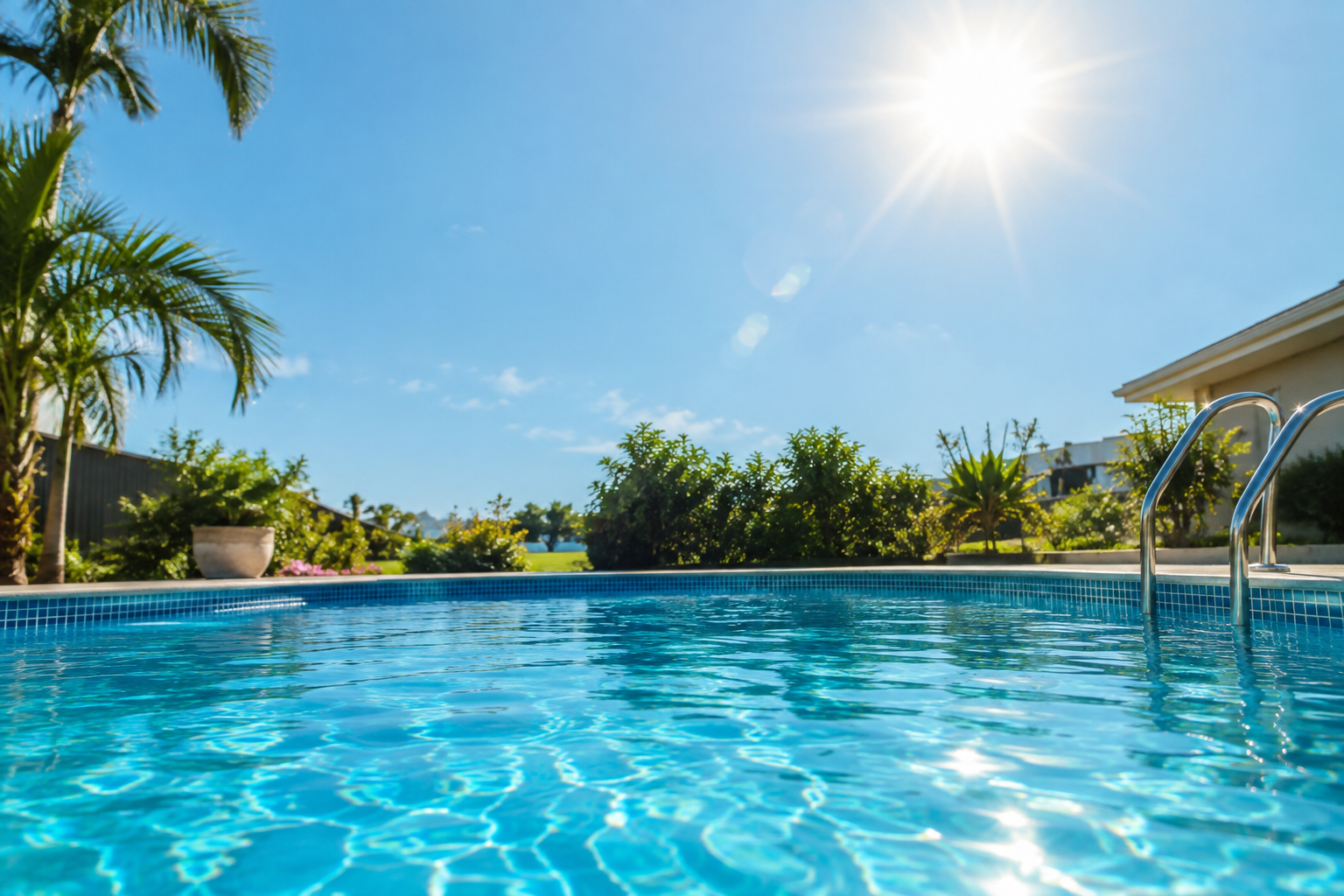
An uncovered pool can lose close to 45,000 litres of water every year, purely through evaporation (Water Corporation). That figure tends to surprise most pool owners. A pool cover can bring summer water use down by up to 250 litres a day.
Left uncovered, a pool can lose more water in a year than it actually holds. That sounds unbelievable until the numbers are checked properly. Most people blame a leak long before they consider evaporation.
The truth is, evaporation quietly does more damage to a water bill than most owners realise. This guide explains what counts as normal water loss, why pools evaporate faster than expected, and what actually helps. It also covers a simple test to rule out a real leak before spending money on fixes that were never needed.
What is normal evaporation in a swimming pool?
To establish whether water loss from your pool is a problem it is first necessary to understand what evaporation from an uncovered swimming pool might be like to expect.
Evaporation from pool water forms part of the normal losses from an uncovered pool and for pools in Australia average evaporation would be between 3mm and 7mm per day. On occasions when the weather is hot, dry and windy, evaporation rates can increase to as much as 10.2mm per day. But this increased loss of water from the pool due to evaporation only, is perfectly normal and is not a leak.
Over a week this loss of water would translate to a drop of between 2cm and 5cm in the uncovered pool’s water level. This is typical evaporation loss from a swimming pool.
Why do pools evaporate faster than you expect?
The rate of evaporation is influenced by several factors. While all of these factors influence evaporation of water, for the majority of residential pools some of these will be more significant than others. Initially, wind from surrounding areas will remove the layer of moisture from the surface of the water and this dry air is then replaced by more dry air allowing evaporation to increase.
The sun’s heat will also provide the water molecules with sufficient energy to escape into the air as vapor. Dry air will pull more moisture from the surface of the water as there is more room for it to expand and move. A larger pool will have a greater surface area exposed to the atmosphere which will result in greater evaporation. Warm water will evaporate faster than cool water.
This is because warm water has more energy in it and therefore the water molecules have more energy and are able to escape into the air as vapor more easily.
Quick check: evaporation or leak?
Plenty of pool owners spend money fixing evaporation when a leak was the real problem all along. A simple test clears up the confusion in a day or two.
Try this bucket test:
- Place a bucket on the pool step so it sits partly in the water.
- Mark the water level inside the bucket and outside it, on the pool wall.
- Leave it alone for 24 to 48 hours.
- Compare both levels.
If the pool has dropped more than the bucket, there is likely a leak somewhere. If both levels dropped by roughly the same amount, evaporation is doing exactly what it normally does. Only once a leak has been ruled out does it make sense to invest time and money into reducing evaporation.
How to reduce swimming pool evaporation
Once evaporation is confirmed as the cause, a few simple habits make a real difference.
What actually helps:
- Cover the pool overnight, every night if possible.
- Keep it covered on hot, windy days.
- Cover it whenever the heater is switched on.
None of this is guesswork. The EPA’s WaterSense programme states that a pool cover can prevent up to 95 percent of pool water evaporation. That is a massive reduction for something so simple. Water Corporation points to the same conclusion, calling a cover the easiest and most effective step any pool owner can take.
1. Cover the pool overnight
Most evaporation actually happens overnight, not during the day. The air cools down quickly after sunset, but the pool water stays warm for hours. That gap between water temperature and air temperature speeds up water loss significantly.
Creating a physical barrier over the water at night slows the exchange between warm water and cooler air. This is exactly where a pool cover or pool enclosure or a sliding deck cover earns its keep; each lets you close off the water overnight without needing a separate floating cover. Over time, this brings several small but useful benefits:
- Less water is lost while nobody is even using the pool.
- Warmer water the next morning, since heat gets trapped rather than lost.
- Fewer top ups needed through the week.
- Lower water and heating bills over the course of a season.
Closing things up at night costs almost nothing in effort and delivers the biggest single result. Whether that’s an enclosure, a sliding deck cover, or a traditional cover, the nightly habit is what matters most.
2. Reduce wind and harsh sun
Wind pulls more water out of a pool than most people assume, so blocking it genuinely helps.
To reduce wind exposure across the water:
- Add a fence or windbreak screen on the side that catches the wind first.
- Plant a hedge or a row of shrubs upwind of the pool area.
To reduce direct sun exposure:
- A shade sail or pergola over part of the pool cuts down heat hitting the surface.
- Trees or tall plants placed thoughtfully can offer shade naturally, without much ongoing effort.
Less wind and less harsh sun both reduce the energy driving water off the surface in the first place.
3. Stop the sneaky stuff that increases evaporation
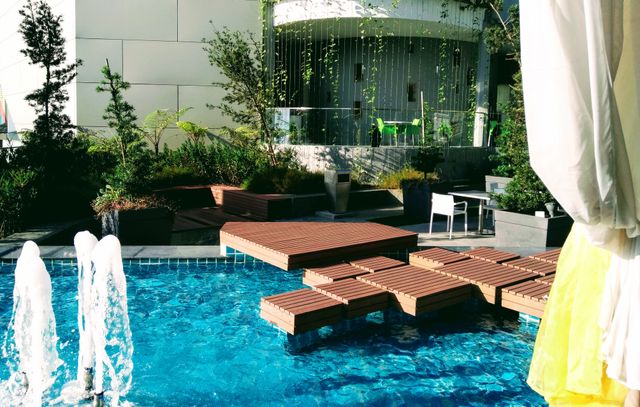
Some pool features look lovely but quietly work against water conservation.
Water features stir things up more than expected:
- Waterfalls, deck jets and fountains break up the surface and throw fine mist into the air. Both speed up evaporation. Using them a little less, especially on hot or windy afternoons, helps more than it might seem.
Unnecessary heating adds to the problem too. Warmer water evaporates faster than cool water, plain and simple. If heating the pool is unavoidable, pair it with a cover. That way, the heat being paid for actually stays in the water, instead of drifting off into thin air.
4. Install a pool enclosure to reduce evaporation
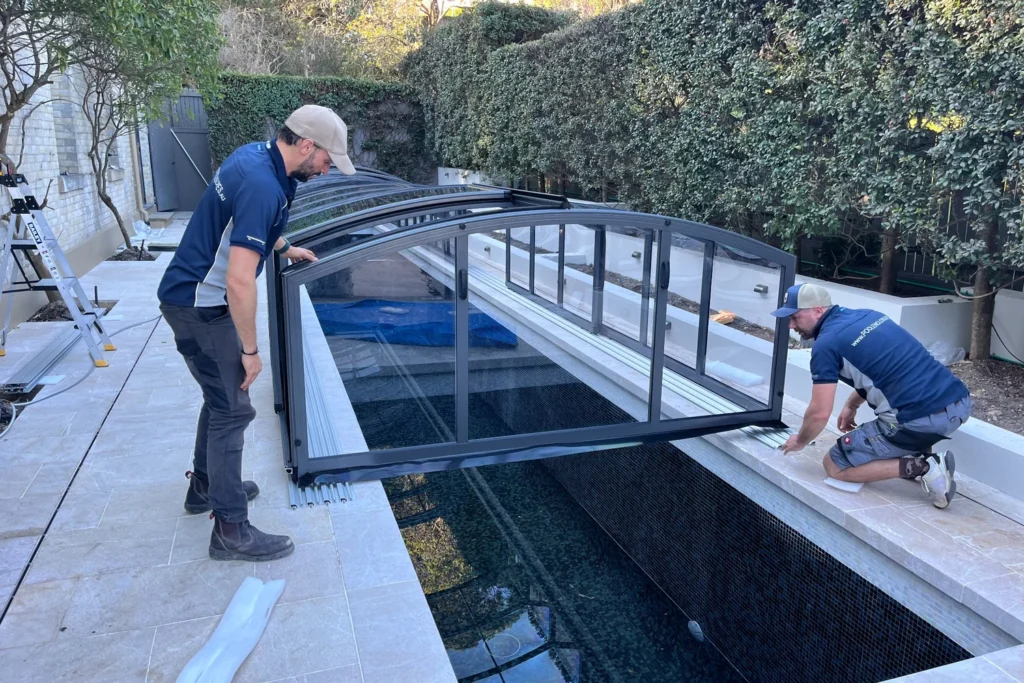
For a longer-term solution, a pool enclosure tackles more than one evaporation trigger at once. It cuts wind across the surface almost entirely, and wind happens to be one of the strongest evaporation drivers around.
- It reduces how much direct sun hits the water on most days, lowering the heat energy involved.
- It makes the habit of covering the pool much easier to keep up, since covers already deliver the biggest reduction of all.
Where an enclosure has the edge over a cover alone:
- A cover only works when someone remembers to close it. An enclosure reduces wind and sun exposure continuously, with no daily habit required.
- Covers block the water when you want to swim; an enclosure lets the pool stay open and usable while still cutting exposure.
- A cover mainly blocks evaporation at the surface; an enclosure also tempers wind speed and sun load in the whole area around the pool, which helps water temperature stability too.
An enclosure will not replace a good cover. Used together, though, the two work well as a team.
The takeaway is that pool evaporation quietly does more damage than most owners expect, and a cover is the simplest way to keep it in check. Wind, heat and sun all play a part, but covering the pool whenever it sits unused makes the biggest difference of all. It costs very little effort, yet it protects water, money and quite a bit of frustration over time. Small habits like this tend to add up faster than people expect.
