
How Much Warmer Does a Pool Get With an Enclosure?
One of the most common questions we get is:
How much warmer will my pool be with a retractable pool enclosure?
There isn’t one temperature increase that applies to every pool. Location, sun exposure, outside temperature, pool size, weather and how the enclosure is used all make a difference.
What we can show you is real data from one of our installations on the NSW Central Coast.
Real Pool Temperature Data From the Central Coast, NSW
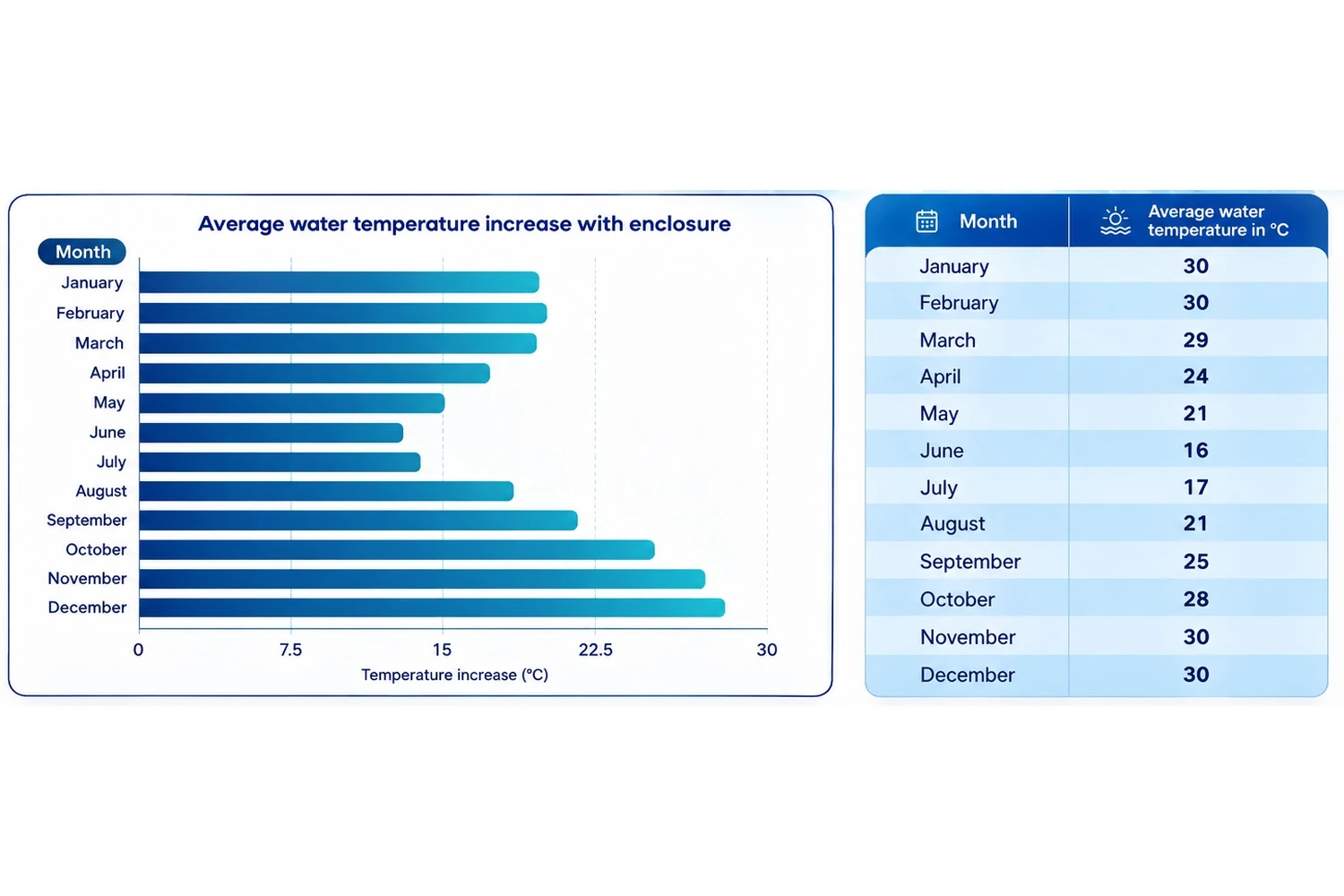
In 2020, water temperatures were recorded throughout the year in a residential swimming pool at Umina Beach on the Central Coast.
Location: Umina Beach, Central Coast, NSW
Pool size: 4 × 8 m
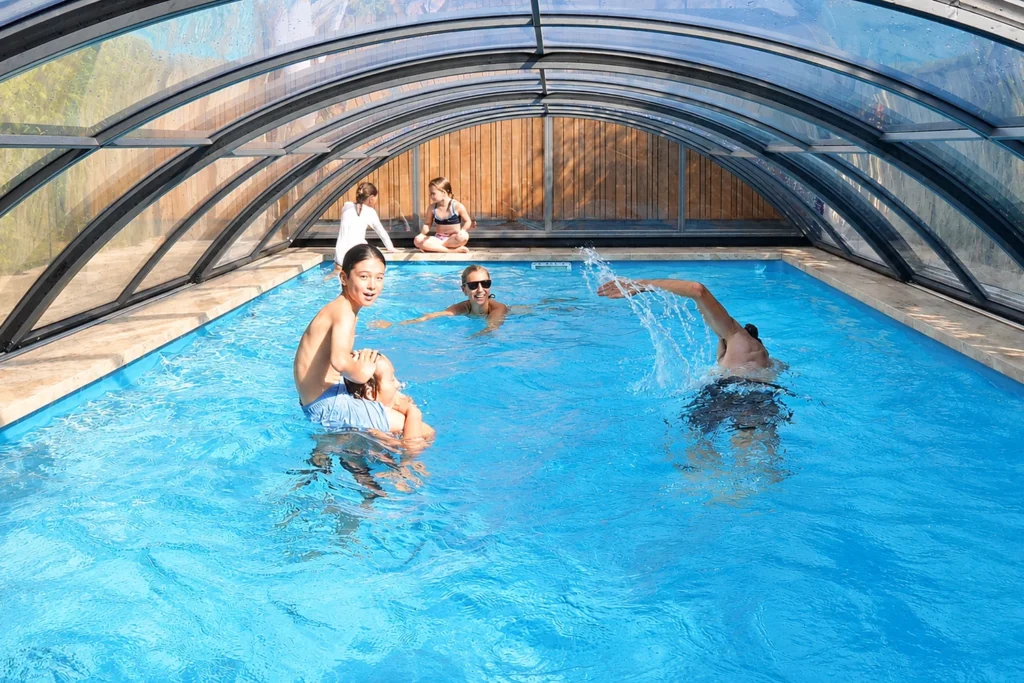
Enclosure: Klasik Clear B retractable pool enclosure
Pool heating: No additional pool heating used for this comparisonThe recorded average water temperatures were:
Month Average Water Temperature January 30°C February 30°C March 29°C April 24°C May 21°C June 16°C July 17°C August 21°C September 25°C October 28°C November 30°C December 30°C The important result isn’t simply the maximum temperature.
It is how long the pool remains at a comfortable swimming temperature through spring and autumn.
In this example, the water was already averaging 25°C in September, reached 28°C in October, and remained around 30°C in November.
That can make a significant difference to how many months of the year you actually use your pool.
How Does a Pool Enclosure Keep the Water Warmer?
A retractable pool enclosure works in several ways.
Solar heat during the day
Sunlight passes through the transparent or translucent polycarbonate enclosure and warms the enclosed pool area. At the same time, the UV-protected polycarbonate helps reduce exposure to harmful UV radiation while still allowing natural light through.
The enclosure helps retain this solar energy rather than allowing the heat to quickly escape to the surrounding air, creating a natural greenhouse effect around the pool.
Less heat lost to wind
Wind moving across an open swimming pool cools the water and increases evaporation.
Closing the enclosure creates a protected environment around the water and dramatically reduces air movement across the pool surface.
Better heat retention overnight
An uncovered pool can gain considerable heat during a sunny day and then lose much of it again as the outside temperature drops.
An enclosure provides another barrier between the pool and the outside environment, helping the pool retain more of the heat it has already gained.
This is particularly useful during spring and autumn, when days can be warm but nights are still cool.
So, How Many Degrees Warmer Will My Pool Be?
This is where we prefer to be realistic.
We don’t tell customers that every pool will gain exactly the same number of degrees.
Under favourable conditions, a pool enclosure can increase the water temperature by up to around 8°C without additional heating, simply by capturing solar energy and reducing heat loss.
However, the actual result depends on:
- How much direct sunlight the pool receives
- Your location and local climate
- Day and night temperatures
- Wind exposure
- The size and volume of the pool
- The size and type of enclosure
- Clear or twin-wall polycarbonate
- How often the enclosure is left closed
- Shading from buildings and trees
- Whether additional pool heating is used
A sunny pool in Sydney or Newcastle will behave differently from a shaded pool in Canberra or Melbourne.
That is why we think actual Australian examples are more useful than promising one fixed temperature increase.
Does a Pool Enclosure Replace a Pool Heater?
Not necessarily.
An enclosure is a passive way of gaining and retaining heat. It does not work like a heat pump where you select 28°C and the system actively heats the water until it reaches that temperature.
For many customers, an enclosure alone can considerably extend the natural swimming season.
For customers who want a guaranteed swimming temperature through the coldest months, combining a pool enclosure with a heat pump can be an excellent solution.
The enclosure helps retain the heat you have paid to produce, so the heating system does not have to continually compensate for the same level of heat loss as an exposed outdoor pool.
The Biggest Benefit Is Often the Longer Swimming Season
The difference becomes particularly noticeable at the beginning and end of summer.
Without an enclosure, you may have beautiful sunny days in September, October, March or April but still find the pool too cold to comfortably use.
An enclosure allows the pool to take advantage of sunny days while protecting it from cool winds and helping retain the accumulated heat overnight.
For many of our customers, this is more important than achieving the highest possible summer water temperature.
It turns a pool that may only be regularly used for a few months into one that can be enjoyed for much more of the year.
What Happens in Summer?
Sometimes the opposite problem occurs.
On hot, sunny Australian days, the enclosure can become very warm and the pool temperature can rise higher than you want.
That is one of the advantages of a retractable enclosure.
Simply slide the enclosure open completely or partially to increase ventilation and return to an outdoor pool.
You can have it closed when you want heat retention and protection, and open when you want the full outdoor swimming experience.
More Than Just Warmer Water
Extending the swimming season is only one reason our customers choose an enclosure.
A retractable pool enclosure can also help:
- Keep leaves and debris out of the pool
- Reduce the effect of wind around the pool
- Reduce evaporation
- Reduce cleaning and pool maintenance
- Improve heat retention
- Reduce reliance on pool heating
- Keep insects and mosquitoes away while swimming
- Let you use the pool in a wider range of weather conditions
And because the enclosure is retractable, you can still have a completely open outdoor pool whenever you want.
Want to Know What You Could Expect at Your Pool?
Every pool and backyard is different.
If you send us a few photos of your pool area, your approximate pool dimensions and your location, we can recommend the most suitable enclosure and explain what you can realistically expect from it.
KBL Pool Enclosures has been designing, supplying and installing European retractable pool enclosures across Australia since 2013.
Always Clean. Always Ready.
Frequently Asked Questions
Does a pool enclosure actually warm the pool?
Yes. A pool enclosure allows solar energy to warm the enclosed pool area while also reducing wind exposure and helping retain heat that would otherwise be lost to the surrounding environment.
How much can a pool enclosure increase the water temperature?
There is no single figure for every pool. Under favourable conditions, a pool enclosure can increase and maintain the water temperature by several degrees compared with an exposed pool. The actual difference depends on weather, sunlight, location, pool size and how the enclosure is used.
Can I swim all year round with a pool enclosure?
That depends on your location and the water temperature you find comfortable. In many parts of Australia an enclosure can substantially extend the natural swimming season. If you want a guaranteed temperature during winter, additional pool heating may still be required.
Will a pool enclosure reduce heating costs?
If you already heat your pool, an enclosure can help retain that heat by protecting the water from wind, cooler outside air and evaporation. This means less heat needs to be replaced by your heating system.
Should I leave the enclosure closed during the day?
During cooler weather, leaving the enclosure closed on sunny days allows you to take advantage of solar heating. During very hot weather, open part or all of the enclosure to provide ventilation and prevent the pool area from becoming too warm.
