
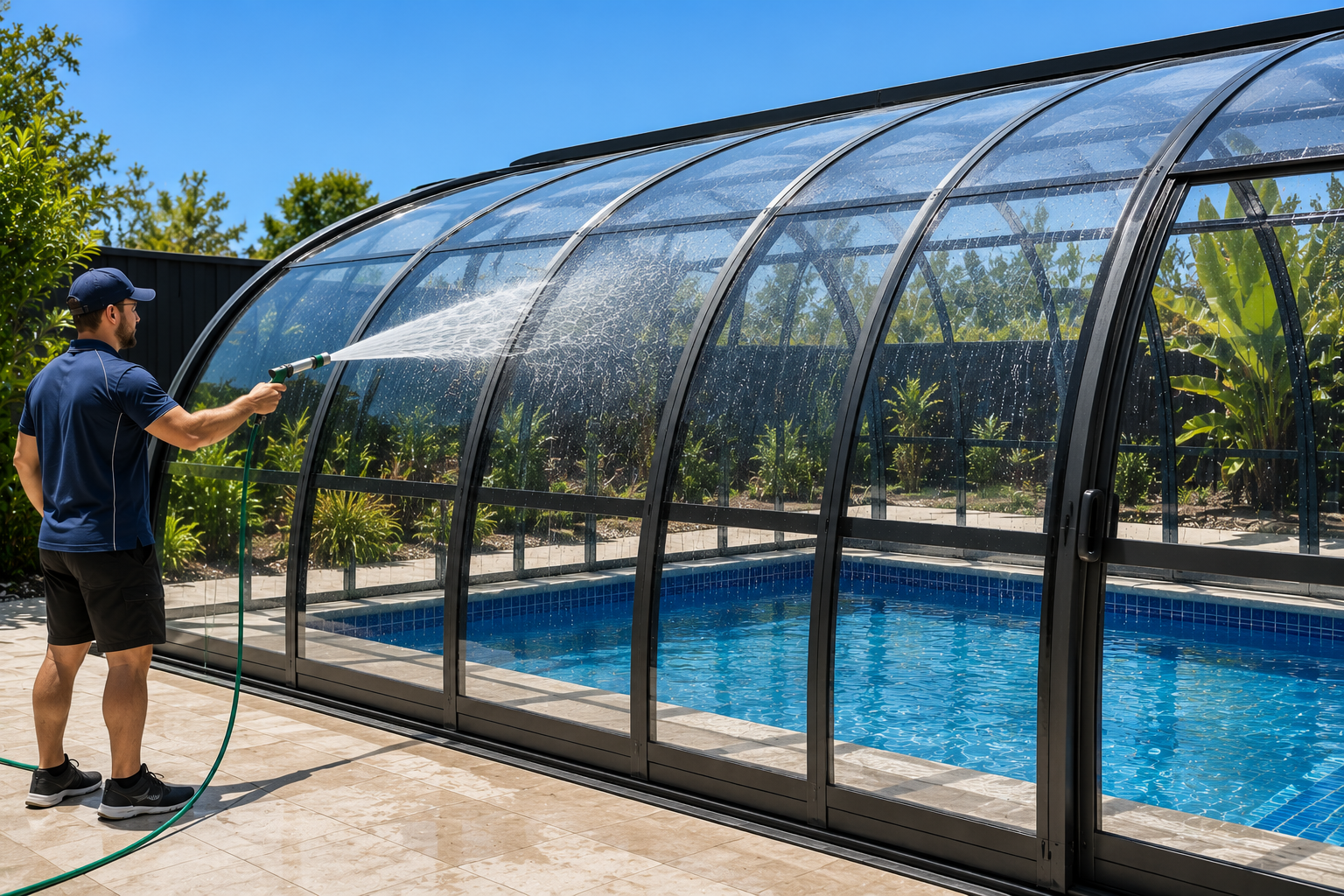
A pool enclosure is one of the easiest parts of a pool to look after, as long as you treat it for what it is. The clear panels are polycarbonate, not glass. The frame is powder-coated aluminium. The bits that move run on nylon rollers and stainless steel bearings. Each of those materials wants slightly different care, and the fastest way to ruin a good enclosure is to clean it like a window.
This guide walks through how to clean a pool enclosure the right way: what to use, what to avoid, and how often. It is written for the telescopic aluminium and polycarbonate enclosures we install across Australia, but the method holds for most retractable enclosures.
What you will need
You do not need anything fancy. Gather these before you start:
- A garden hose, or a pressure washer for a deeper clean
- A bucket of warm water with a few drops of mild dish soap
- A soft microfibre cloth or a soft sponge, plus a second clean cloth for drying
- A soft bristled brush or broom for the tracks
- A telescopic pole or soft brush head for the top panels so you are not climbing on anything
- A can of silicone spray or silicone oil for the moving parts
Keep a couple of spare cloths handy and rinse them often. A cloth that has picked up grit becomes a scratching tool.
How to clean pool enclosure panels, step by step
This is the core of the job. Work top to bottom so dirty runoff never lands on a section you have already finished.
- Rinse first. Hose the whole enclosure down to clear leaves, pollen, bird mess and loose grit. Let the water do the heavy lifting. This is the step that protects the surface. A garden hose is plenty for a regular clean. If the enclosure is very dirty or has not been cleaned for a while, a high-pressure hose is the way to go. It will not damage the panels and it shifts built-up grime far more effectively.
- Wash with soapy water. Dip a soft microfibre cloth or sponge in your warm soapy water and wipe the panels gently, starting at the top. Rinse the cloth in the bucket regularly so you are not moving dirt around. Mild detergent, warm water and a soft cloth is the combination that works.
- Rinse off the soap. Hose the panels again to clear every trace of detergent. Leftover soap dries into streaks.
- Dry to avoid spotting. Wipe the panels down with a clean, dry microfibre cloth. Drying by hand stops the water spots and mineral marks that hard water leaves behind.
For an enclosure that gets a regular rinse, a soap wash only needs to happen every month or two. The water rinse can be more frequent, especially after a dust storm or a windy week.
What never to use on a pool enclosure
This is where most enclosures get damaged. Avoid the following.
Glass cleaners and harsh solvents.
Polycarbonate is light, shatter-resistant, and great in the Australian sun, but it scratches far more easily than glass. Any dust or sand caught under your cloth gets dragged across the surface and leaves fine marks.
Ammonia-based sprays like Windex are not made for polycarbonate. The same goes for thinners, benzene and acetone, which soften polycarbonate and leave a permanent haze. The ALBIXON operating conditions we supply with every enclosure echo this and tell owners to keep petrol, acetone, carbon tetrachloride, butylene glycol and methylated spirits well away from the modules, along with any alkaline cleaner.
Abrasive pads, scourers and powders.
Anything gritty will scratch the panels. No steel wool, no scouring pads, no cleaning powders, and no stiff bristle brushes on the clear surface.
Cleaning in the heat of the day.
When the panels are hot, soap and water dry almost as fast as you apply them, which bakes streaks and spots into the surface before you get a chance to rinse. Clean in the cooler part of the day instead, early morning or in the evening once the sun is off the panels. Polycarbonate generally should not be cleaned while it is hot from the sun, so an evening clean is usually the easiest window.
Sandy cloths.
If you live near the coast or anywhere sand blows in, check that your cloths and rinse water have not picked up grit before they touch a panel.
How to clean tracks and rails of a pool enclosure
The clear panels get all the attention, but a sticky track is what stops an enclosure sliding smoothly. Our enclosures run on aluminium Air Rails, and like any track they collect leaves, dirt and grit over time.
Keep the rails clear with a soft brush, a broom or a rinse from the hose. It pays to clear the tracks, seals and drain channels of leaves, stones and dirt regularly, and more often on motorised enclosures. Before you slide a module, glance along the track for stones or debris that could scratch the rollers or jam the run.
Looking after the moving parts
Here is the part owners skip most, and the part that quietly decides how long an enclosure lasts. The rollers, locks and segment stops need a light service.
Our enclosures use nylon rollers with sealed stainless steel bearings, and in over a decade of installing them across Australia we have not had to replace a single roller. They earn that record because they are looked after. Lubricate the movable parts, including the locks on each segment, with a silicone spray lubricant at least three times a year, which matches the schedule in the ALBIXON hand-over protocol we issue with each enclosure. Silicone is the right choice because it keeps things sliding without the sticky residue that oil-based sprays leave behind to trap dust.
How often should you clean a pool enclosure?
There is no single answer, because it depends on where you live and what blows into your yard. As a rough rhythm:
- Weekly to fortnightly: a quick hose rinse and a glance along the tracks.
- Monthly to every couple of months: a full soapy wash of the panels and frame.
- Three times a year: silicone on the rollers, locks and moving parts.
- Twice a year, minimum: a proper top-to-bottom clean, ideally going into summer and again before the cooler months.
If you notice green or black marks appearing on the panels, clean them sooner rather than later, because leaving those deposits lets the material stain.
Keeping your enclosure in good shape
Cleaning a pool enclosure is genuinely a small job when you do it often and do it gently. Rinse before you wipe, keep the chemicals mild, look after the tracks and rollers, and balance your water. Do that and the enclosure stays clear, slides smoothly and lasts for years.
If you would like a hand or you are thinking about a new enclosure built for Australian conditions, get in touch with our team and we will point you in the right direction.
Frequently asked questions
Can I use a pressure washer on my pool enclosure?
Yes. A garden hose is fine for a regular clean, but if the enclosure is very dirty or has not been cleaned for a while, a high-pressure hose is the way to go. It will not damage the panels and it clears built-up grime much more effectively.
What is the best thing to clean polycarbonate panels with?
Warm water with a few drops of mild dish soap, applied with a soft microfibre cloth or sponge, then rinsed and dried by hand. Avoid glass cleaners, solvents and anything abrasive.
Why are my enclosure panels going cloudy?
Cloudiness usually comes from fine scratches built up by wiping dry grit, or from harsh chemicals that have hazed the surface. Always rinse first, use soft cloths, and keep solvents away from the panels.
My enclosure has started sticking when it slides. What do I do?
Clear the tracks of debris with a soft brush or hose, check for stones in the rail, and lubricate the rollers and locks with a silicone spray lubricant. If it still sticks, get in touch and we will take a look.
